Church Structure & Jurisdictions
Romanian Orthodox Church
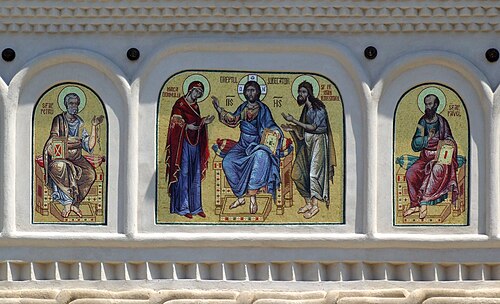
The second largest of the Orthodox Churches, with some sixteen million faithful. It serves in Romanian, a language descended from Latin, in the Byzantine rite, so that the Liturgy of Constantinople is sung there in the speech of Rome. Its autocephaly was recognised by Constantinople in 1885 and it became a patriarchate in 1925. Its monastic life was renewed in the eighteenth century by St Paisius Velichkovsky at Neamt, whose disciples carried the Jesus Prayer from there to Russia, and its monasteries of Bucovina are painted inside and out, their walls a Bible in colour. Under communism its priests and monks filled the prisons, and one of them, St Dumitru Staniloae, spent five years in them; he translated the Philokalia into Romanian in twelve volumes and wrote a dogmatic theology that is read across the Orthodox world. The relics of St Parascheva at Iasi draw one of the largest pilgrimages in Europe each October.
Sources
- Timothy Ware, The Orthodox Church archive.org, to borrow
- Fr. Dumitru Staniloae, The Experience of God
- Fr. Dumitru Staniloae, The Experience of God (Orthodox Dogmatic Theology)