Church History
Fall of Constantinople (1453)
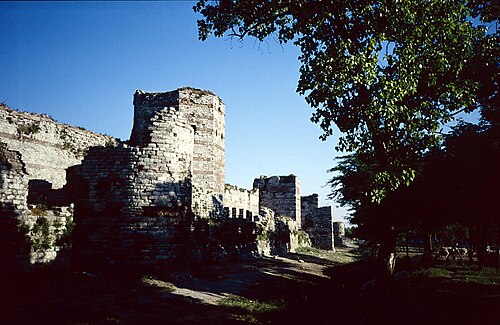
The capture of the city by the Ottoman Sultan Mehmed II on Tuesday 29 May 1453, after a siege of seven weeks, which ended the Roman empire in the East. The last emperor, Constantine XI Palaiologos, died fighting at the walls, and his body was never identified. On the night before, Greeks and Latins prayed together in Hagia Sophia, which most of the people had shunned since the union of Florence was proclaimed there the December before. The city was sacked, and the Great Church became a mosque. Mehmed then made St Mark of Ephesus’ disciple Gennadios Scholarios, an opponent of the union, patriarch in 1454 and head of all the Orthodox of the empire, so the Patriarchate survived as the Church of a subject people for nearly five centuries. Greeks still count Tuesday an unlucky day. Hagia Sophia became a museum in 1934 and a mosque again in 2020.
Sources
- Doukas, Decline and Fall of Byzantium (Orthodox Byzantine historian, eyewitness era)
- Timothy Ware, The Orthodox Church archive.org, to borrow
- Laonikos Chalkokondyles, Histories (Byzantine historian, 15th c.)
- George Sphrantzes, Chronicle