Church History
Era of Persecutions (64-313 AD)
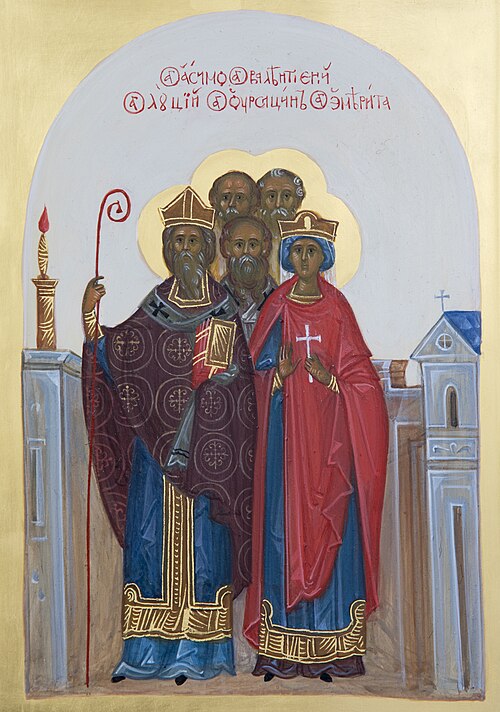
The two and a half centuries between Nero and Constantine in which to be a Christian was a crime that could cost a life. It came in waves rather than without pause: under Nero, who blamed the Christians for the fire of Rome in 64 and under whom Sts Peter and Paul died; under Trajan, who ruled that Christians were not to be hunted but were to die if accused and unwilling to sacrifice; under Decius in 250, who demanded a certificate of sacrifice from everyone; and last and worst under Diocletian, from 303, whose persecution lasted in the East until 313. Most of the great martyrs of the calendar are from these years. The Church learned then what it has kept: that a martyr’s death is his birthday, kept as a feast; that his bones are, as the Smyrnaeans wrote of St Polycarp’s, more precious than jewels; and that the Eucharist is offered over them, which is why every altar still holds relics. The blood of the Christians is seed, wrote Tertullian, and the growth of the Church under the sword bore him out.
Sources
- Eusebius, Ecclesiastical History (Books VIII-X) NPNF
- Acts of the Martyrs (Acta Martyrum, patristic collections) the Greek New Testament
- St. Clement of Alexandria, Stromateis I.1 (on the age of martyrdom) ANF
- The Martyrdom of Polycarp 18 ANF
- Pliny the Younger, Letters X.96-97 (with Trajan’s reply)
Connections
- Apostolic Age (30-100 AD)
- Edict of Milan (313 AD)
- Holy Relics
- Ss. Boniface and Aglae
- Ss. Gurias, Samonas and Abibus
- Ss. Menas, Hermogenes and Eugraphus
- St. Anastasia the Deliverer from Potions
- St. Anastasia the Roman
- St. Barbara the Great Martyr
- St. Catherine of Alexandria
- St. Charalambos the Hieromartyr
- St. Clement of Rome (d. c. 101)
- St. Demetrios of Thessalonica
- St. George the Great Martyr (c. 275-303)
- St. Gregory the Illuminator
- St. Ignatius of Antioch (c. 35-108)
- St. Justin Martyr (c. 100-165)
- St. Marina the Great Martyr
- St. Menas the Great Martyr (d. c. 304)
- St. Panteleimon the Healer
- St. Paraskevi of Rome
- St. Philemon the Apostle
- St. Polycarp of Smyrna (c. 69-155)
- St. Theodore the Recruit
- The Forty Martyrs of Sebaste
- The Martyrs of Persia (4th-5th c.)
- The New Martyrs under the Ottomans