Church History
Emperor Constantine the Great
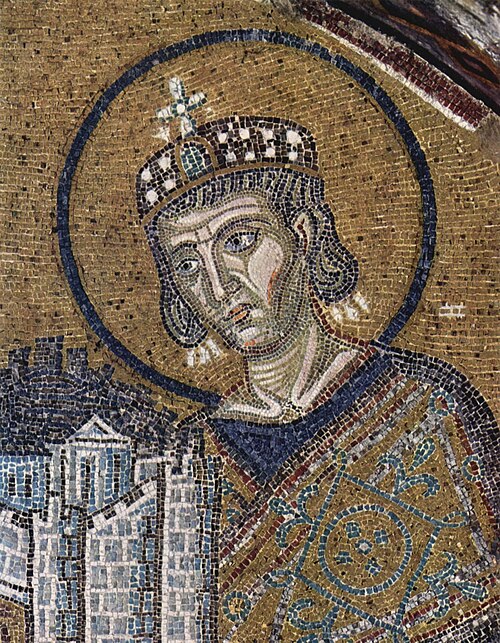
The first Roman emperor to be a Christian, and honoured by the Church with his mother Helen as Equal-to-the-Apostles on 21 May. Proclaimed at York in 306, he defeated Maxentius at the Milvian Bridge in 312 after the sign of the cross was shown to him with the words, in this sign conquer, as Eusebius heard it from his own lips. In 313 he and Licinius gave the Church its freedom, in 325 he summoned the bishops to Nicaea, and in 330 he dedicated Constantinople, the New Rome, which would be the heart of Orthodox Christianity for eleven centuries. The Church does not hide what else is true: in 326 he had his son Crispus and his wife Fausta put to death, and he was baptised only as he was dying, in 337, by Eusebius of Nicomedia, a friend of Arius. Deathbed baptism was common then, and the Church honours him for the baptism that washed away what came before and for what he did for the Church, not as a model of private life.
…he saw with his own eyes the trophy of a cross of light in the heavens, above the sun, and bearing the inscription, Conquer by this.
Sources
Connections
In the calendar: 21 May