Church History
The Byzantine Empire & Orthodoxy
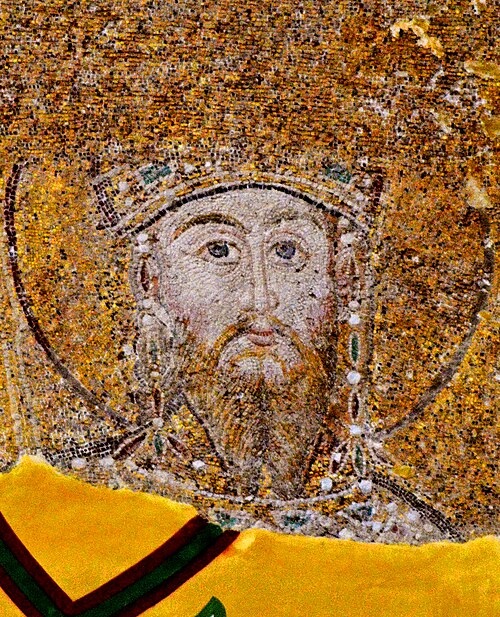
The Roman empire in the East, from the dedication of Constantinople in 330 to its fall in 1453, whose people never called themselves anything but Romans. It was the world in which Orthodoxy took its shape: the emperors summoned the Ecumenical Councils, Justinian built Hagia Sophia and set out in his sixth Novel the ideal of a symphony between the priesthood and the empire, two gifts of God from one source, each with its own work. The ideal was often betrayed, by iconoclast emperors and by emperors who forced unions on the Church, and the Church more than once resisted the throne. The empire sent Sts Cyril and Methodius to the Slavs, and the rite of its Great Church became the rite of the whole Orthodox world. Its end did not end its Church: under the Ottomans and in the Slavic lands, it lived on in what has been called Byzantium after Byzantium.
Sources
- Timothy Ware, The Orthodox Church (Ch. 2-4) archive.org, to borrow
- Procopius, On Buildings (eyewitness account of Byzantine imperial culture)
- Fr. Georges Florovsky, The Byzantine Fathers of the Fifth Century
- Justinian, Novel 6 (535)
Connections
- Ecumenical Patriarchate of Constantinople
- Edict of Milan (313 AD)
- Emperor Constantine the Great
- Fall of Constantinople (1453)
- Fourth Crusade & Sack of Constantinople (1204)
- Hagia Sophia
- Iconoclasm
- Ss. Cyril & Methodius (9th c.)
- The Baptism of Rus (988)
- The Divine Liturgy
- The Protection of the Theotokos: October 1