Iconography & Sacred Art
Hagia Sophia
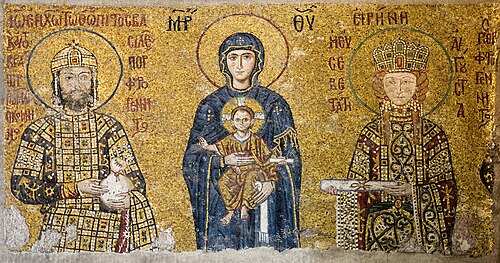
The Great Church of Constantinople, dedicated to the Holy Wisdom of God, which is Christ. Justinian built it in five years and dedicated it in 537, after the church before it burned in the Nika riots; its architects, Anthemius of Tralles and Isidore of Miletus, raised a dome that Procopius said seemed to hang from heaven on a golden chain. The dome fell in 558 and was raised again higher. For nine centuries it was the cathedral of the Ecumenical Patriarch and the model of Orthodox worship: its rite became the rite of the whole Church, and in it the envoys of Prince Vladimir did not know whether they were in heaven or on earth. The Crusaders plundered it in 1204. On 29 May 1453 it became a mosque, and in time its mosaics were plastered over; it was made a museum in 1934, when many were uncovered, and a mosque again in 2020, over the protests of the Ecumenical Patriarchate and of Orthodox Churches everywhere.
Sources
- Procopius, On Buildings (De Aedificiis) I.1 (Byzantine eyewitness, 527-565 AD)
- Patriarch Germanos of Constantinople, Commentary on the Divine Liturgy (on sacred space)
- Ecumenical Patriarchate, Statement on Hagia Sophia (2020)
- Paul the Silentiary, Description of Hagia Sophia (563)