Psalmody & Hymnography
Byzantine Chant
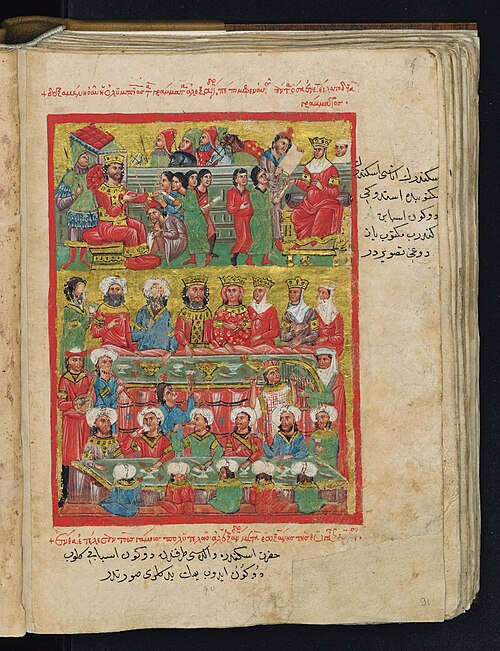
The psaltic art, the singing of the Greek Church, and the root of every Orthodox chant tradition. It is a single melody, without harmony or instruments, sung over a held note, the ison, and it moves in the eight modes of the Octoechos, four authentic and four plagal, each with its own scale and character. Its notation, the neumes, marks the steps of the voice rather than fixed pitches, and was simplified into the New Method by Chrysanthos of Madytos and his colleagues in 1814, the form cantors still read. There are three ways of singing: the quick syllabic heirmologic style of the canons, the fuller sticheraric style of the Vespers hymns, and the slow, ornamented papadic style of the Cherubic Hymn and the communion verses, whose great master was St John Koukouzelis, called the angel-voiced. The Slavic chants grew from it. In 2019 UNESCO listed it as part of the world’s heritage, which is a fair description of how the Church has always treated it.
Sources
- Octoechos (Book of Eight Tones) OCA, the services
- Dimitri Conomos, Byzantine Hymnography and Byzantine Chant
- UNESCO ICH inscription (2019)
- Chrysanthos of Madytos, Great Theory of Music (1832)