Psalmody & Hymnography
Slavic Church Singing
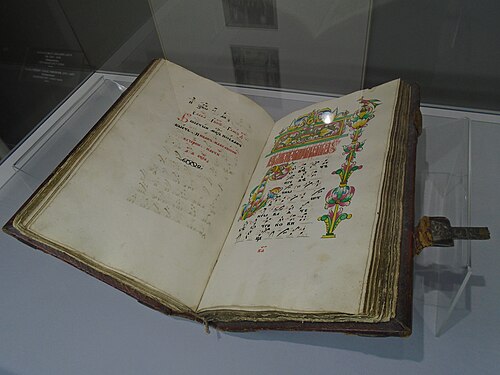
The singing of the Slavic Churches, which began as Byzantine chant carried north with the Slavonic books of Sts Cyril and Methodius and their disciples. In Russia it grew into Znamenny chant, a single melodic line in its own notation, and for five centuries that was the sound of the Russian Church. From the seventeenth century singing in parts came in through Ukraine, and in the eighteenth an Italian style of concert writing, of which Dmitry Bortniansky was the master. The nineteenth century fixed a plainer common chant, the Obikhod, and at its end the Moscow Synodal school, Kastalsky, Chesnokov and Rachmaninoff, whose All-Night Vigil of 1915 is its crown, turned back to the old chants and set them for choir. The Old Believers still sing Znamenny in unison, and monasteries such as Valaam and the Kiev Caves keep chants of their own.
Sources
- Rachmaninoff, All-Night Vigil Op. 37 (Vespers): pinnacle of Russian Orthodox choral tradition
- Octoechos (Eight Tones: the modal foundation of all Slavic liturgical chant) OCA, the services
- Typikon of the Russian Orthodox Church (chant guidelines) OCA, the services
- St. John of Damascus, compositions in the Octoechos (origin of the eight-mode system) OCA, the services
- Sergei Rachmaninoff, All-Night Vigil, Op. 37 (1915)