Iconography & Sacred Art
Major Icon Styles
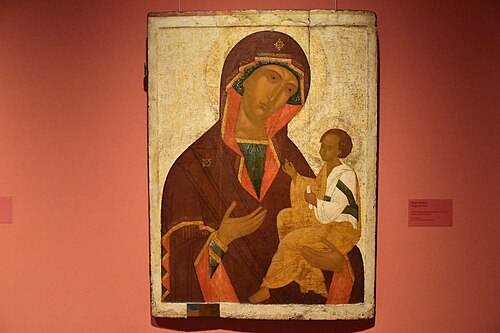
The ways icons have been painted within one tradition, every one of them bound by the same faces, the same feasts and the same canon. Byzantium set the forms, from the Macedonian and Komnenian centuries to the Palaiologan painting of the fourteenth, with its movement and its light. Novgorod painted with clear colour and bold line, and Moscow gave the tradition Theophanes the Greek, Andrei Rublev and Dionisy. After 1453 the Cretan painters, Theophanes the Cretan among them, kept the Byzantine manner alive under Venice and taught it to Athos, while Serbia, Bulgaria, Romania and Georgia each gave it an accent of their own. In the eighteenth and nineteenth centuries much painting turned toward the naturalism of Western art, and the twentieth century turned it back: Photios Kontoglou in Greece and Leonid Ouspensky in Paris returned to the old models and the old reasons for them.
Sources
- Constantine Cavarnos, Guide to Byzantine Iconography
- Leonid Ouspensky & Vladimir Lossky, The Meaning of Icons
- Photios Kontoglou, Ekphrasis (1960)
- Leonid Ouspensky, Theology of the Icon