Church History
Apostolic Age (30-100 AD)
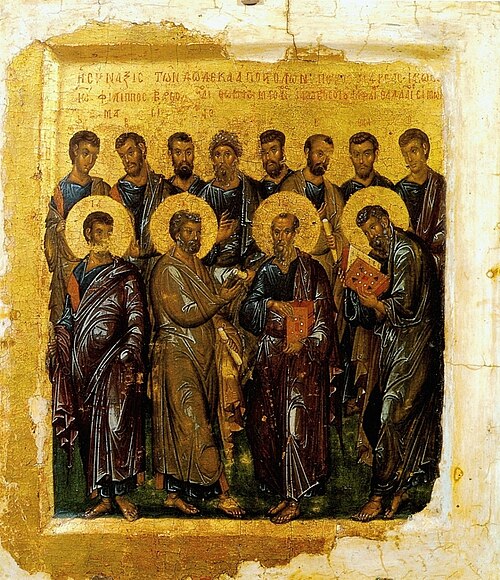
The first Christian generation, from Pentecost to the death of St John, the last of the Twelve, around the end of the first century. In it the Gospel went from Jerusalem to Antioch, where the disciples were first called Christians, and to Rome; the Council of Jerusalem decided around 49 that Gentiles need not be circumcised; St Paul made his journeys and wrote his letters; St James the son of Zebedee, St James the brother of the Lord, St Peter and St Paul were martyred; and in 70 the Temple was destroyed. By the end of it the New Testament had been written, the Eucharist was kept on the first day of the week, and the Church was ordered as it still is. St Clement of Rome, writing around 96, says the apostles appointed bishops and deacons and provided that others should succeed them, and a decade later St Ignatius of Antioch writes of the bishop, the presbyters and the deacons in every church, and of nothing done without the bishop.
Sources
- Acts of the Apostles the Greek New Testament
- Eusebius, Ecclesiastical History NPNF
- St. Clement of Rome, First Epistle to the Corinthians (c. 96 AD) ANF
- St. Ignatius of Antioch, Letter to the Smyrnaeans 8 ANF
Connections
- Acts of the Apostles
- Era of Persecutions (64-313 AD)
- Holy Orders (Ordination)
- Patriarchate of Antioch
- Patriarchate of Jerusalem
- Pentecost & the Birth of the Church
- Ss. Peter & Paul, Apostles
- St. Gregory the Illuminator
- St. Ignatius of Antioch (c. 35-108)
- St. James, the Brother of the Lord
- St. Matthew the Evangelist
- St. Polycarp of Smyrna (c. 69-155)
- The Didache (Teaching of the Twelve)