Church History
Hesychast Controversy (14th c.)
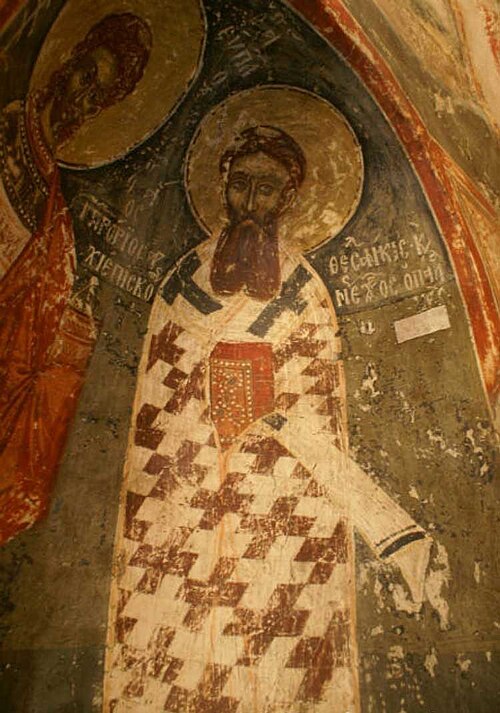
The dispute of the 1330s to the 1350s over the prayer of the monks of Athos and the light they said they saw. Barlaam of Calabria, a learned Greek from Italy, mocked their bodily method and argued that no created eye could see God, so the light must be a created thing. St Gregory Palamas answered in the Triads with the distinction the Fathers had assumed and he made explicit: God is unknowable in His essence and truly known in His uncreated energies, and the light of Tabor was the glory of God Himself. The monks of Athos signed the Hagiorite Tome in his support. A council in 1341 condemned Barlaam, who left for Italy and became a Latin bishop; the quarrel then became entangled with a civil war, and Palamas spent years in prison before the councils of 1347 and 1351 vindicated him and condemned Akindynos and Gregoras. The decisions entered the Synodikon of Orthodoxy, and the Church keeps St Gregory on the Second Sunday of Lent.
Sources
- St. Gregory Palamas, Triads for the Defense of the Holy Hesychasts archive.org, to borrow
- John Meyendorff, A Study of Gregory Palamas (SVS Press: Orthodox scholar) the Greek New Testament
- Council of Constantinople (1341): Tomos in favor of Palamas
- The Hagiorite Tome (1340)
- The Synodikon of Orthodoxy the text