Councils and Their Canons
Fifth Ecumenical Council: Constantinople II (553)
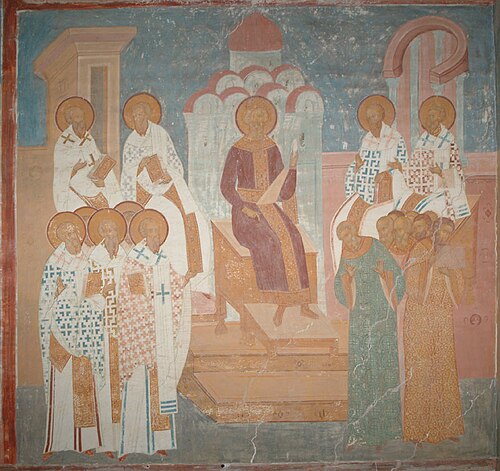
Convened by the Emperor Justinian and presided over by Eutychius of Constantinople, with 165 bishops signing its acts. Its work was to settle how Chalcedon is to be read: it condemned the Three Chapters, the person and writings of Theodore of Mopsuestia, the writings of Theodoret of Cyrus against St. Cyril, and the letter of Ibas of Edessa to Mari, so that the two natures could never be taken to mean two subjects. It confessed that One of the Holy Trinity suffered in the flesh, received the twelve anathemas of St. Cyril as the measure of Chalcedon, and named the Theotokos ever-virgin. It condemned Origen by name alongside Arius, Nestorius and Eutyches, and the fifteen anathemas against Origenism are received with the council in the tradition, though whether the council itself issued them or a synod shortly before it is disputed. Pope Vigilius was in the city and would not attend, wrote in defence of the Three Chapters, and assented only afterwards, and northern Italy went into the Three Chapters schism, Aquileia for more than a century. It did not win back those who had refused Chalcedon, which was the thing Justinian wanted from it most.
Sources
- Acts of the Fifth Ecumenical Council (Constantinople II, 553 AD) the Acts, NPNF
- Anathemas of the Fifth Ecumenical Council (Constantinople II, 553) the Acts, NPNF
- St. Cyril of Alexandria, Twelve Anathemas the Ephesus documents
- Emperor Justinian, Edict on the Three Chapters (544)
- St. Justinian the Emperor, Confession of Faith