Councils and Their Canons
Second Ecumenical Council: Constantinople I (381)
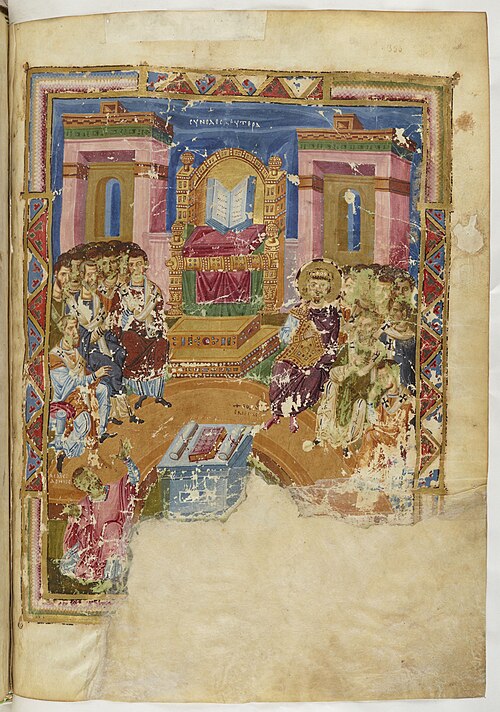
The council of a hundred and fifty bishops that met at Constantinople in 381 under Theodosius, after the Arian emperors were gone. St Gregory the Theologian presided for part of it and resigned during it. It confessed the divinity of the Holy Spirit against those who made Him a creature, and gave the Creed the form the Church says now: the Lord and Giver of life, who proceeds from the Father, who with the Father and the Son is worshipped and glorified, and the articles on the Church, baptism, the resurrection and the life of the age to come. Its third canon gave the bishop of Constantinople the first place after Rome, because it was the new Rome, which is the beginning of the order of the churches. It was a council of the East alone, and became ecumenical when Chalcedon received it.
Sources
- Second Ecumenical Council (381 AD), the Symbol of Faith and Canon 3 the canon, in Greek and English
- Theodoret, Ecclesiastical History V.7-9 NPNF
- St. Gregory the Theologian, Oration 42 (Farewell Oration) NPNF
- Fourth Ecumenical Council (451 AD), the Acts
Connections
- Arianism
- Homoousios (Consubstantial)
- Nicene-Constantinopolitan Creed
- On the Holy Spirit (St Basil)
- Pneumatology (Holy Spirit)
- St. Amphilochius of Iconium (c. 340-394)
- St. Basil the Great (330-379)
- St. Cyril of Jerusalem
- St. Gregory of Nyssa (c. 335-395)
- St. Gregory the Theologian (329-390)
- The Holy Trinity
- The Pentarchy
The canons
The 7 canons of this council are on this site in Greek, with our own English translation: The Second Ecumenical Council, the canons.