Saints & Church Fathers
St. Maximus the Confessor (c. 580-662)
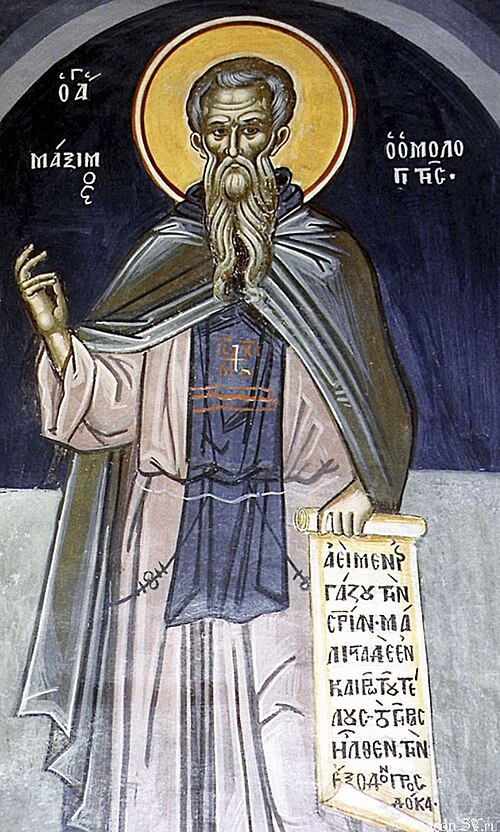
A court official who became a monk, and the theologian who held the Church to the full humanity of Christ when the emperor, the patriarchs of three sees and very nearly everyone else had agreed to teach one will in Him. Maximus answered that a nature without its own will is not a nature, so a Christ without a human will has not saved the human will, which is the thing that needed saving: in the garden He willed as man what He willed as God. For refusing to be silent he was tried in Constantinople, his tongue cut out and his right hand cut off, and he died in exile in Lazica in 662. The Sixth Ecumenical Council vindicated him eighteen years later. His Ambigua and his writings on the logoi of creation are among the deepest things in Orthodox theology. Feast: January 21.
Sources
- St. Maximus the Confessor, Ambigua
- St. Maximus the Confessor, Disputation with Pyrrhus
- St. Maximus the Confessor, Mystagogia archive.org, to borrow
- Sixth Ecumenical Council (680-681 AD), the Definition the Acts, NPNF
Connections
- Ancestral Sin (vs. Original Sin)
- Apocatastasis (Universal Restoration)
- Christology
- Creation & Cosmology
- Grace Is Uncreated
- Image & Likeness of God
- Kenosis (The Self-Emptying)
- Monothelitism
- Perichoresis (Mutual Indwelling)
- Sixth Ecumenical Council: Constantinople III (680-681)
- St. Dionysius the Areopagite
- St. Sophronius of Jerusalem
- Synergy (Free Will & Grace)
- The Corpus Areopagiticum
- The Logos and the logoi
- The Nous and the Heart
- Theosis (Deification)
In the calendar: 21 January