Theology & Dogma
Theosis (Deification)
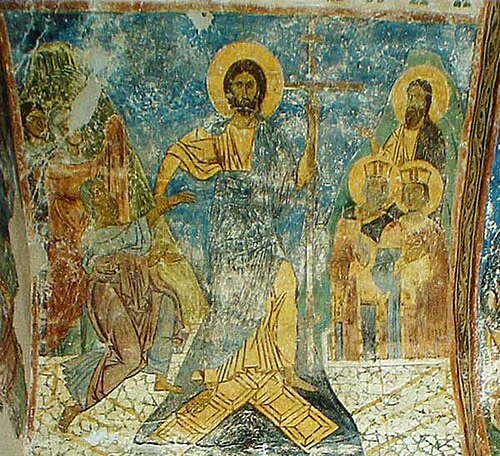
The purpose of a human life, in the Orthodox understanding: to become by grace what God is by nature. Scripture calls it becoming partakers of the divine nature, and Christ quotes the psalm that says you are gods; the Fathers put it in the sentence St Athanasius made famous, God became man so that man might become god. It is not absorption, and it is not a change of essence: a person stays a person and a creature, and is filled with God as iron in a fire is filled with fire without ceasing to be iron. It is participation in God’s uncreated energies, which are God Himself given, and not in His essence, which no creature shares. It begins in baptism and chrismation, is fed in the Eucharist, and is worked out in keeping the commandments, prayer and love; the Transfiguration is its picture. St Maximus says God and man are paradigms of each other.
…the Word of God, our Lord Jesus Christ, who did, through His transcendent love, become what we are, that He might bring us to be even what He is Himself.
Sources
- 2 Peter 1:4 the Greek New Testament
- Psalm 81:6 and Gospel of John 10:34 the Septuagint
- St. Athanasius, On the Incarnation 54 CCEL
- St. Maximus the Confessor, Ambigua 10
- St. Gregory Palamas, The Triads archive.org, to borrow
- St. Irenaeus of Lyons, Against Heresies V, Preface ANF
Connections
- Essence-Energies Distinction
- Grace Is Uncreated
- Hesychasm
- Holy Eucharist (Communion)
- Image & Likeness of God
- Kenosis (The Self-Emptying)
- On the Incarnation (St. Athanasius)
- Soteriology (Salvation)
- St. Athanasius the Great (c. 296-373)
- St. Gregory of Nyssa (c. 335-395)
- St. Gregory Palamas (1296-1359)
- St. Irenaeus of Lyon (c. 130-202)
- St. Justin Popovic
- St. Maximus the Confessor (c. 580-662)
- St. Seraphim of Sarov (1754-1833)
- St. Symeon the New Theologian (949-1022)
- The Incarnation
- The Jesus Prayer
- The Mystical Theology of the Eastern Church
- The Philokalia
- Transfiguration of Christ: August 6