Theology & Dogma
Image & Likeness of God
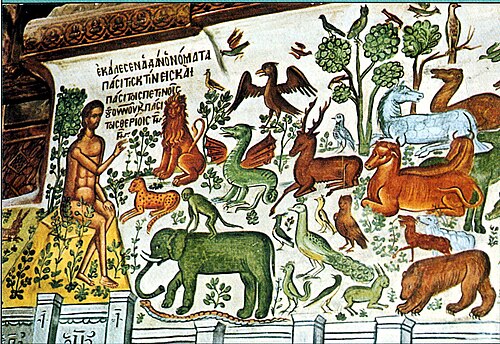
Let us make man in our image, after our likeness, says Genesis, and the Fathers made much of the two words. From St Irenaeus on, many read the image as what every human being has by creation, reason, freedom, the capacity for communion with God, and the likeness as what the image is for, becoming like God, which is theosis. We possess the one by creation, one of them wrote, and acquire the other by free choice. Not all the Fathers divided the words so, but all taught that the image is darkened by sin and never destroyed, and that Christ, the true Image of the Father, came to restore it. The image is not a part of the person but the whole person, body and soul, and the Church acts on it: at the Liturgy the deacon censes the icons and then the people, because they are icons too.
Sources
- Genesis 1:26-27 the Septuagint
- St. Irenaeus, Against Heresies V.6.1 ANF
- St. Maximus the Confessor, Ambigua 7
- Vladimir Lossky, Mystical Theology, Ch. 6 CCEL
- St. Gregory of Nyssa, On the Making of Man NPNF
- St. Basil the Great (attr.), On the Origin of Humanity I.16
Connections
- Ancestral Sin (vs. Original Sin)
- Creation & Cosmology
- On the Incarnation (St. Athanasius)
- Orthodox Understanding of Personhood
- St. Basil the Great (330-379)
- St. Gregory of Nyssa (c. 335-395)
- St. Irenaeus of Lyon (c. 130-202)
- St. Maximus the Confessor (c. 580-662)
- The Incarnation
- Theology of Icons
- Theosis (Deification)