Theology & Dogma
The Incarnation
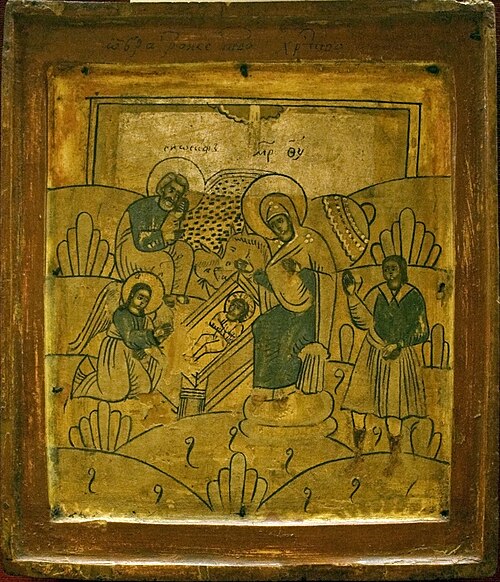
The Word who was with God and was God became flesh: the eternal Son took from the Virgin a complete human nature, body and rational soul, and lived a human life from conception to death without ceasing to be God. He did not merely look human, as the Docetists said, nor borrow a human body as a vehicle for a divine mind, as Apollinarius said, and the Fathers’ reason for insisting is St Gregory’s: what has not been assumed has not been healed. So it is one Person, the Son, who is born, weeps, hungers, dies and rises, which is why His mother is the Theotokos and why God can be painted. The feasts from the Annunciation to the Ascension keep it in order, and the whole of salvation rests on it: God came where we are, so that we might go where He is.
Sources
- Gospel of John 1:1-14 the Greek New Testament
- St. Athanasius, On the Incarnation CCEL
- St. Gregory the Theologian, Letter 101 (to Cledonius) NPNF
- Fourth Ecumenical Council (451 AD), the Definition of Faith
Connections
- Annunciation: March 25
- Christology
- Fourth Ecumenical Council: Chalcedon (451)
- Iconoclasm
- Image & Likeness of God
- Kenosis (The Self-Emptying)
- Meeting of the Lord (Hypapante): February 2
- Nativity of Christ (Christmas)
- On the Incarnation (St. Athanasius)
- Recapitulation (Anakephalaiosis)
- St. Cyril of Alexandria
- St. Gregory the Theologian (329-390)
- St. John the Theologian (the Evangelist)
- The Eleousa (Tenderness)
- The Image Not Made by Hands (Mandylion)
- The Logos and the logoi
- Theology of Icons
- Theosis (Deification)
- Theotokos (Mother of God)